Overlapping Sets: Draw the GRID
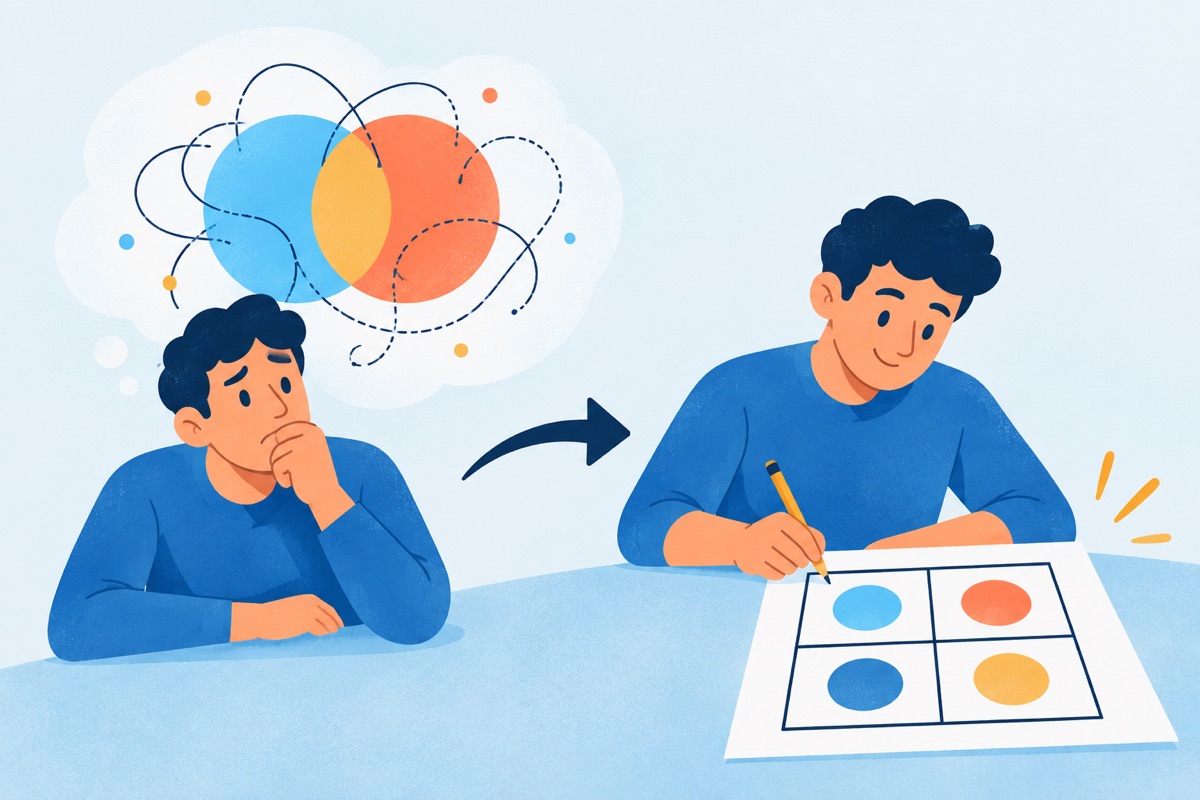
Say you're twelve minutes into the Quant section. The question says "both" and "neither" in the same sentence. You read it. You read it AGAIN. You sketch two circles, then stare at them, because now you're not sure whether that 25 goes inside a circle or outside both. Two minutes gone, and you haven't done a single piece of math.
I watch this happen every week. Here's my blunt verdict: overlapping sets questions are NOT hard. They're bookkeeping. They only feel hard because people try to juggle four groups of people in their head at once. Stop juggling. Draw the GRID.
What these questions actually are
An overlapping sets question gives you one group of people (or things) sorted two ways at once. Employees who do or don't speak Spanish, and do or don't speak French. Students who are or aren't taking finance, and are or aren't taking marketing. Some people land in both groups. Some land in neither. The question asks you to find one of those pieces.
On the GMAT Focus Edition, the Quantitative Reasoning section is 21 Problem Solving questions in 45 minutes. Problem Solving just means a regular question with five answer choices. That works out to a little over 2 minutes per question on AVERAGE (see the official GMAT format page). Overlapping sets can also show up in Data Insights as Data Sufficiency, where you decide whether the facts you're given are enough to answer the question. Same skill, same grid.
Build the GRID
Every one of these questions fits in a box with three columns and three rows. Down the side: Group A yes, Group A no, Total. Across the top: Group B yes, Group B no, Total.
That gives you nine boxes. Four inside boxes are the real people: both, A only, B only, neither. The edges are the totals. And here's the whole trick: every row adds across, and every column adds down. That's it. Once you fill in what the question tells you, the empty boxes fall out by simple subtraction, one at a time.
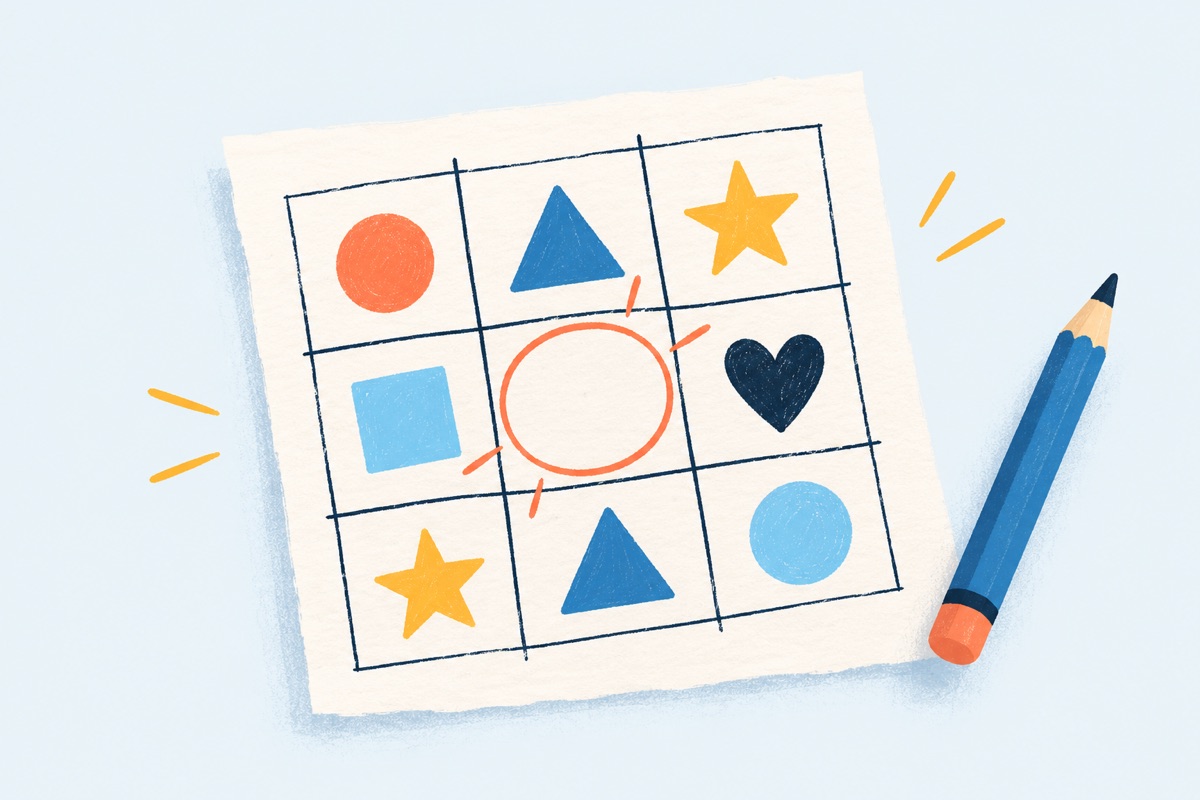
If this feels familiar, it should. It's the same instinct as building the rate TABLE before you touch an equation. Structure first. Math second. Your notes do the thinking so your brain doesn't have to hold it all.
"But I know the formula"
Sure you do. Total = A + B − Both + Neither. It works on the question above. Plug in and you get 120 = 70 + 45 − Both + 25, so Both = 20.
Here's the problem. That formula covers ONE shape of question. The GMAT loves to hand you "of those" phrasing, fractions of a subgroup, percents with no total at all, or a question that asks for "B only" instead of "both." Now you're bending the formula and hoping. The grid doesn't care what shape the question is. It works the same way every single time, and it's sitting on your paper where you can check it.
So I'll ask you the question I ask everyone who clings to the formula: what do you want MORE, to feel clever or to get the point?
Notice the "of those" piece. Taking 3/4 of 40 is the same move as using a MULTIPLIER on a ratio. And notice we never wrote an equation. We pictured the numbers and filled boxes, which is the same thing we push in skipping the formulas on median and range.
The mistakes I see every week
- Doing it in your head. Four inside boxes plus five totals is nine numbers. Nobody holds nine numbers in their head under a clock without dropping one. INSTEAD: draw the grid the moment you see "both," "neither" or "only." Ten seconds of drawing saves a minute of re-reading.
- Drawing circles. Venn diagrams look friendly, but "neither" lives outside both circles and people forget it's there. INSTEAD: use the grid. "Neither" gets its own box, so you can't lose it.
- Forcing the formula onto a weird question. The formula breaks the moment the question goes sideways. INSTEAD: trust the grid on every version, and use the formula only as a quick check if you like.
- Panicking when there's no total. "40% of attendees" with no headcount throws people. INSTEAD: TEST a VALUE. Use 100 for percents. For fractions, pick a number every fraction divides into cleanly.
- Answering the wrong box. The math was perfect, but they asked for "Spanish only" and you gave "Spanish total." INSTEAD: before you click, put your pencil on the exact box the question wants. Read the question's last line out loud in your head.
- Skipping the check. One subtraction slip and the whole grid is off. INSTEAD: make sure every row adds across and every column adds down. It takes five seconds and it catches the silly mistakes that actually cost you points.
Your move today
Don't just nod along. Go to GMAC's official practice materials and pull five overlapping sets questions. Draw the grid on every single one, even the easy ones, ESPECIALLY the easy ones. Time yourself. I'll bet the grid versions come in faster than the ones you used to solve in your head, and I'll bet you don't miss a single one because of a lost "neither."
Then do those same five again tomorrow, from scratch. The goal isn't to remember the answers. It's to make drawing the grid so automatic that you do it without thinking on Test Day.