You Don't Need MORE Questions. You Need to REDO the Ones You've Done.
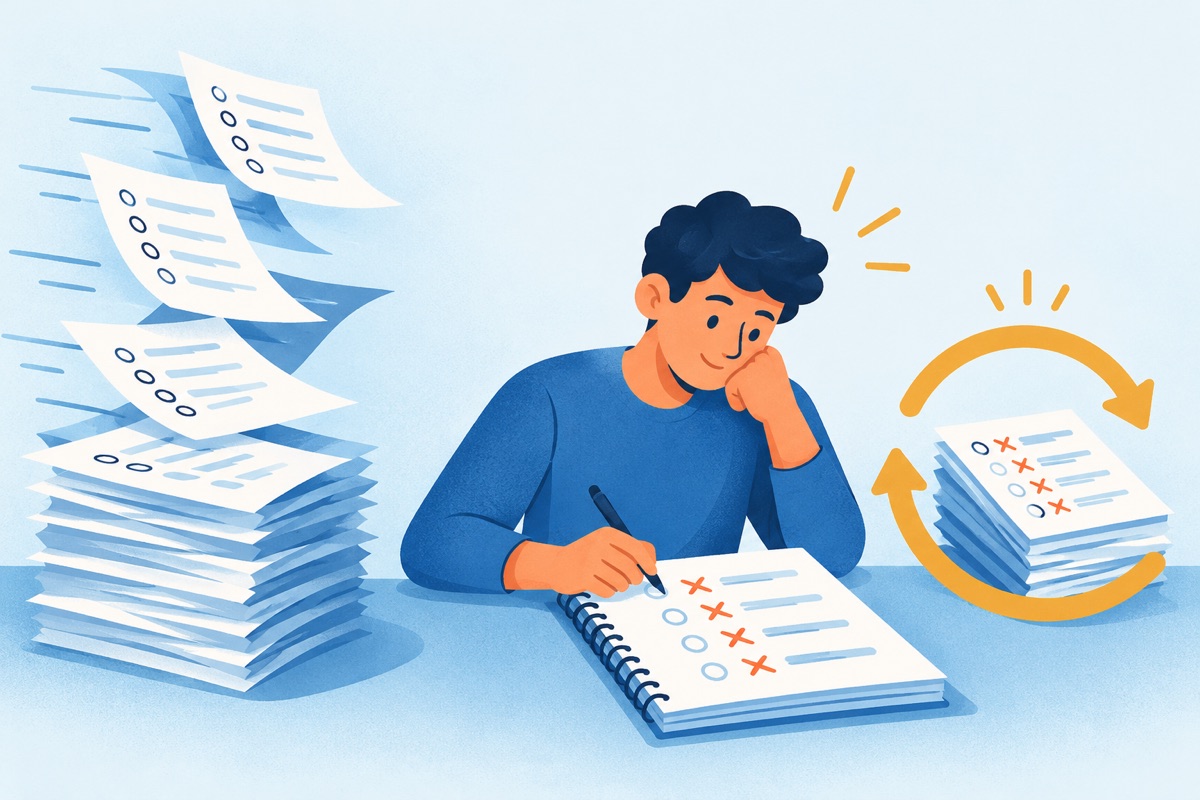
It's Sunday night. You just finished 40 brand new GMAT questions. You got 28 right, you wrote the score in your notebook, and you feel like you EARNED something. Then Wednesday comes, and you miss a percent question the exact same way you missed one two weeks ago.
Here's my verdict: that Sunday felt productive, and most of it wasn't. You didn't train. You collected.
I watch people do this every single week. They treat a fresh question like a fresh chance, and they treat an old miss like trash to throw out. That's backwards. Your old misses are the most valuable questions you own. The fix is not MORE questions. The fix is to REDO the ones you've already done, the right way, until the mistake stops showing up.
Why new questions feel good and teach you less
A new question gives you a quick hit: right or wrong, a number goes up. That feels like progress. But a miss you never redo is a mistake you keep. It just waits for Test Day.
The GMAT is a predictable, standardized test. The same patterns come back again and again in new clothes. So your pile of misses is a map of exactly where you will drop points when it counts.
So ask yourself: what's more powerful, being an acquaintance of 5,000 questions or being the commander of 1,000? You know the answer. Now act like it.
Here's a wager. Pull up the last 20 questions you got wrong. I'll bet MORE than half of them were questions you knew how to do. You misread a word. You did a step in your head. You picked the answer that looked right. Don't read another word until you've actually counted.
Done? That count matters more on the current test than you might think. The GMAT Focus Edition gives you 21 Quantitative Reasoning questions, 23 Verbal Reasoning questions and 20 Data Insights questions, with 45 minutes for each section, according to GMAC's page on the exam format. That's not a lot of questions. There's very little room for a miss you could have avoided.
How to redo a question the right way
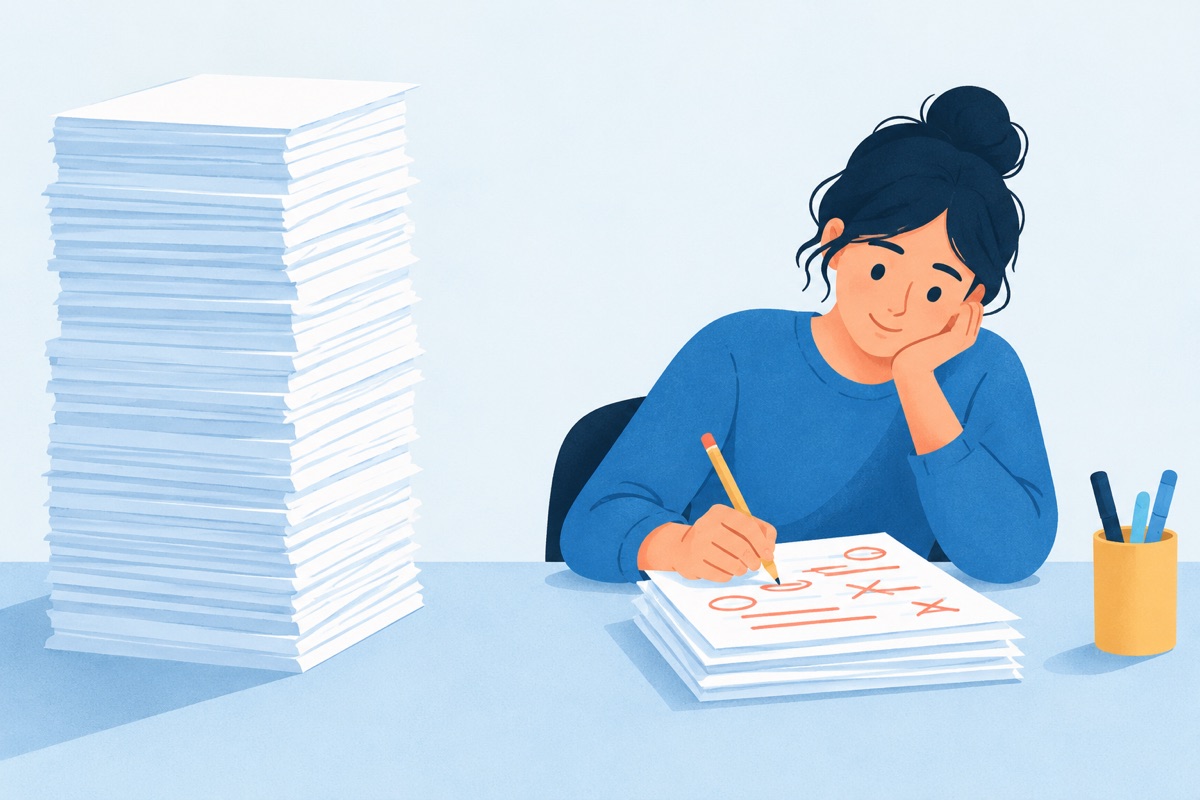
Redoing a question does NOT mean looking at it, remembering the answer, and nodding. That's reading, not training. Here's the process.
- Wait a few days. Let 3 to 7 days pass so you don't just remember the answer letter. You want to face it cold.
- Time it and use paper. Same conditions as Test Day. Pen, scratch paper, a clock running.
- Write every step. Notes on the facts, the question being asked, and every bit of math. NOTHING in your head. If you think you're "too smart" to take notes, that's pride, and pride is a ceiling.
- Name the trap before you check. Write one line: what is this question testing, and what did it try to trick you into doing?
- Compare your PROCESS, not just your answer. Did you get it right the long way? Is there a faster route, like testing a value or testing the answers? A right answer in 4 minutes is still a problem.
- Change one number and solve it again. If you can only solve the exact question you've seen, you memorized it. If you can solve a twist, you own it.
- Keep it in the pile until it's boring. It comes out only after you get it right twice in a row, on time, the efficient way.
Let's run one.
Notice what happened there. The math was simple. The miss, when it happens, is never about math ability. It's about doing a step in your head and trusting the answer that "looks right." A redo with notes on paper catches that. A new question doesn't.
The redo mistakes I watch people make
- Redoing the question the next morning. You still remember the answer, so you "get it right" and learn nothing. INSTEAD: wait at least a few days, then face it cold and timed.
- Reading the explanation and calling it a redo. Nodding along is not the same as doing it. INSTEAD: close the explanation and solve it with a pen, start to finish.
- Only redoing the hardest questions. The brutal ones feel important, but they're rare. INSTEAD: redo the gettable misses first. That's where most of your missing points live.
- Writing "careless" and moving on. "Careless" isn't a cause. It's a shrug. INSTEAD: name the exact step that broke, like I explain in why your error log is useless if it only says 'careless'. An error log is just a list of your misses and why they happened.
- Only redoing Quant. People skip Verbal and Data Insights because redoing them feels weird. INSTEAD: redo those too. On a Critical Reasoning miss (a short argument with a question about it), write one line on why your wrong choice was wrong. On a Data Sufficiency miss (where you decide if the facts given are enough to answer, not what the answer is), write which statement you misjudged and why.
- Saving all the redos for one big Saturday. Cramming a hundred redos in one sitting turns training into a chore. INSTEAD: mix a few redos into every session. A big weekend dump is the same problem as the 'weekend warrior' study plan.
What about your timing?
Some of you are thinking, "I don't have time to redo questions. I'm already running out of time on the test." That's exactly backwards. Running out of time is a symptom, not the disease. It comes from re-reading, working in your head, and taking the long route. Redos are where you find the shorter route, so they FIX your timing. If the clock is your big worry, start with defining your pacing problem before you blame the clock.
And you still need new questions. Of course you do. GMAC sells official practice materials, and you should use them. Just don't burn through them like a bag of chips. Every new question you miss becomes a redo. That's the deal.
Think of a tennis player who misses the same backhand every match. Does she go play 50 new matches? No. She goes to the practice court and hits that backhand until it's boring. Your old misses are your practice court.
Your challenge for today
Before you touch a single new question, pull your last 10 misses. Pick 5 that you haven't seen in at least a few days. Redo them on paper, timed, writing every step. Then count how many you missed the SAME way as before.
That number isn't bad news. It's your study plan. Go find it tonight.