Weighted Averages: The Answer Is Closer to the BIGGER Group

Say you're staring at a mixture question. Two solutions, two percents, one target. You write x on your pad, then 12 + x, then a fraction, then another fraction. Three minutes later you have an equation full of decimals and a sinking feeling. The whole time, the answer was sitting in plain sight. You could have crossed off three of the five choices in about ten seconds.
I watch Test Takers do this every single week. Weighted average questions LOOK like algebra, so people treat them like algebra. But GMAT Quant is not a math test. It's a critical thinking test that uses math as the gauge. And one common sense rule takes apart most of these questions before you do any real math:
The overall average is always closer to the BIGGER group.
What a weighted average actually is
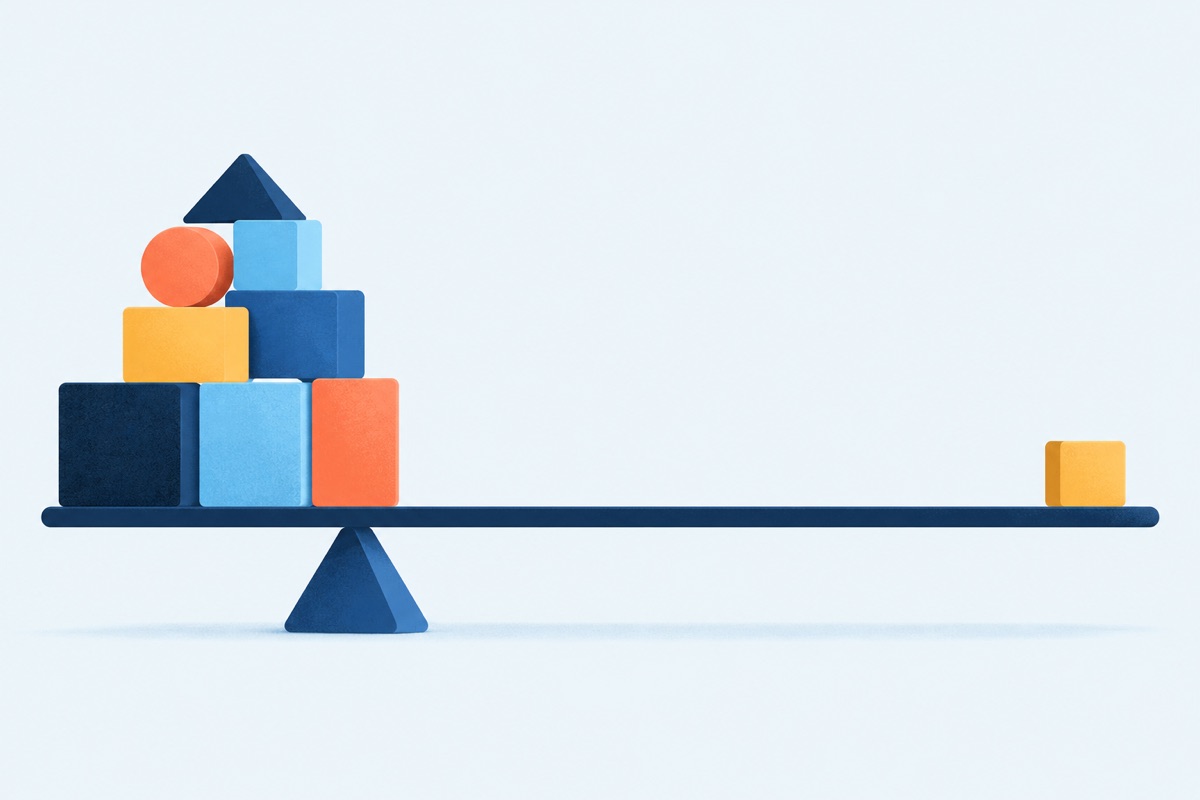
A plain average treats every value the same. A weighted average is what you get when you combine groups that are NOT the same size. The bigger group has more pull, so it drags the overall average toward itself.
Stop reading and think about this for a second. If 99 people average 100 points and 1 person scores 0, is the overall average anywhere near 50? Of course not. It's 99. That one person barely moves the needle. You already knew that. You just don't use it when the numbers get less obvious.
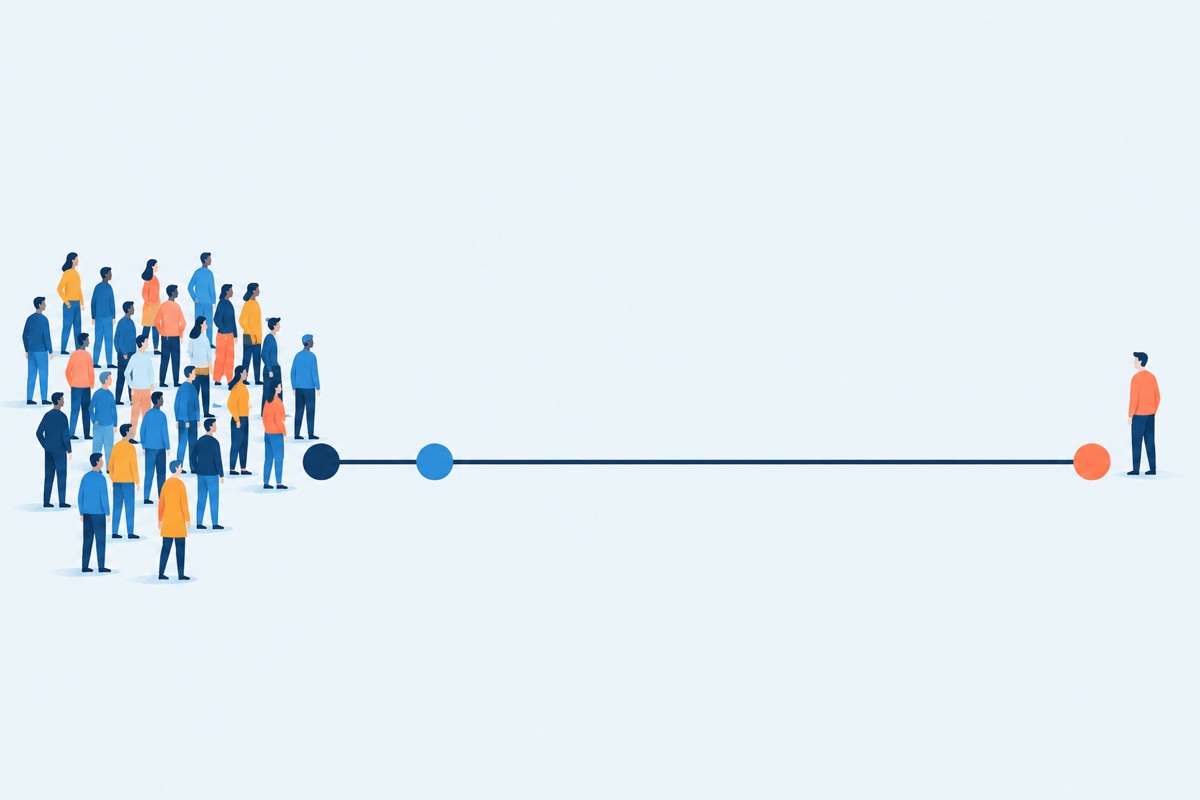
Here is everything you need to know, and it all fits on one line of your notepad:
- The overall average is BETWEEN the two group averages. Never outside them.
- If the groups are the same size, it's exactly in the middle.
- If one group is bigger, the overall average is closer to THAT group.
That's it. The middle point is your dividing line. Figure out which side of it the answer lives on, and half the choices are gone.
The shortcut behind the shortcut
Notice what happened in Step 3. The distances from the overall average to each group are in the REVERSE ratio of the group sizes. The 3 side got a distance of 1. The 1 side got a distance of 3. Big group, small distance. Small group, big distance. That's the seesaw again.
This is the same idea I keep pushing in stop solving for x when the question doesn't ASK for x. The algebra will get you there eventually. But on a section with 31 questions in 62 minutes, you average about 2 minutes per question, and every minute you burn on a long setup is a minute you don't have for the question after it.
Mixtures are the same question in a costume
A mixture question is just a weighted average where the groups are amounts of liquid (or pounds of coffee, or bags of nuts) and the averages are percents or prices. Same rule. Same seesaw.
It even works when there's nothing to calculate
Data Sufficiency (DS) is the Quant question type where you don't solve for an answer. You decide whether the information you're given is ENOUGH to answer the question. The five answer choices are always the same. The weighted average rule is deadly here, because DS questions often care about which side of the middle you're on, not the exact number.
The mistakes I see every week
- Averaging the averages. It's the first thing your brain reaches for, and the GMAT knows it. That answer is almost always one of the choices.
INSTEAD: Write the middle point on your pad, then ask which side the bigger group pulls toward. - Building the equation before looking at the answers. The choices are information. Ignoring them is like doing a puzzle with the picture on the box turned face down.
INSTEAD: Use the rule to cross off what can't work, then TEST THE ANSWERS that are left. - Doing it in your head. You think you're 'smart enough' to hold 15 at 90 and 5 at 70 and the middle point all at once. Then you flip one of them and pick the wrong answer with total confidence.
INSTEAD: Two groups, two averages, one middle point. Written down. Every time. Translating the prompt onto paper is the whole point of translate before you calculate. - Flipping the ratio. People match the bigger group with the bigger distance, and the math falls apart.
INSTEAD: Big group, SMALL distance. Say it out loud if you have to. Then check: does your answer sit closer to the bigger group? If not, you flipped it. - Rushing the read. Mixture prompts bury which amount is known and which one you're solving for. Skim it and you'll answer for the wrong solution. If that sounds familiar, read why speed reading won't get you to 700+.
INSTEAD: Read once, carefully, taking notes as you go. Circle the thing they actually asked for.
Why this matters now
Right now the GMAT gives you 31 Quant questions in 62 minutes, adaptive question by question, and you can't go back to change an answer. You can see the full layout on GMAC's page on the exam's sections and timing. GMAC has also announced a shorter GMAT Focus Edition for late 2023. The announced cuts are the essay, Sentence Correction and geometry. Averages are not on that list. Whichever version you sit for, this rule is worth learning now.
Here's your challenge for TODAY. Pull five weighted average or mixture questions from your official practice materials. Before you do ANY math on each one, write the middle point on your pad and cross off every answer on the wrong side of it. Count how many choices you eliminated. I'll bet it's more than half on most of them. Then solve, and check whether the answer landed where the rule said it would. If it didn't, find out WHY before you move on.