Word Problems: Translate Before You Calculate
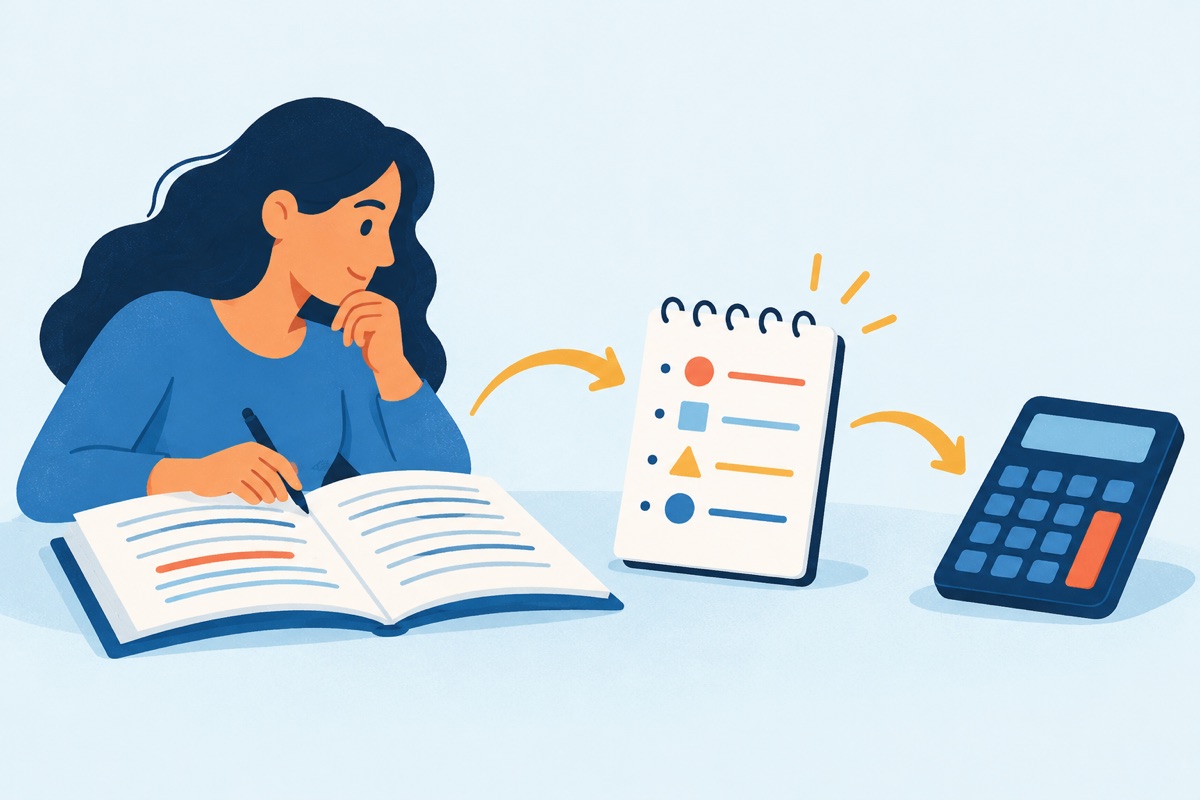
Here's a scene I watch every single week. A Test Taker reads the first line of a word problem, and the pencil is ALREADY moving. An equation shows up on the pad before the last sentence has even been read. Two minutes later, they're staring at a number that isn't one of the five choices. Or worse, a number that IS one of the choices and is still wrong.
That question was lost in the first ten seconds. Not in the algebra. In the translation.
The math is almost never the problem
On the current GMAT, the Quant section gives you 31 questions in 62 minutes. That's an average of 2 minutes per question. The questions come in two types. Problem Solving is a normal question with five answer choices. Data Sufficiency asks whether the information you're given is ENOUGH to answer a question, without making you find the final number. Word problems show up in both.
The section is also adaptive. That means the computer picks each next question based on how you're doing, and you cannot go back to change an answer. So a bad translation isn't something you get to 'fix' later. Once you click, it's gone.
Here's my wager. Pull up the last five word problems you got wrong. I'll bet that in MOST of them, your arithmetic was fine. You did perfect math on the wrong equation. Don't take my word for it. Go look. I'll wait.
Word problems aren't math problems in a costume. They're reading problems with some math attached. If the reading is sloppy, perfect math just gets you to the wrong answer faster.
What 'translate' actually means
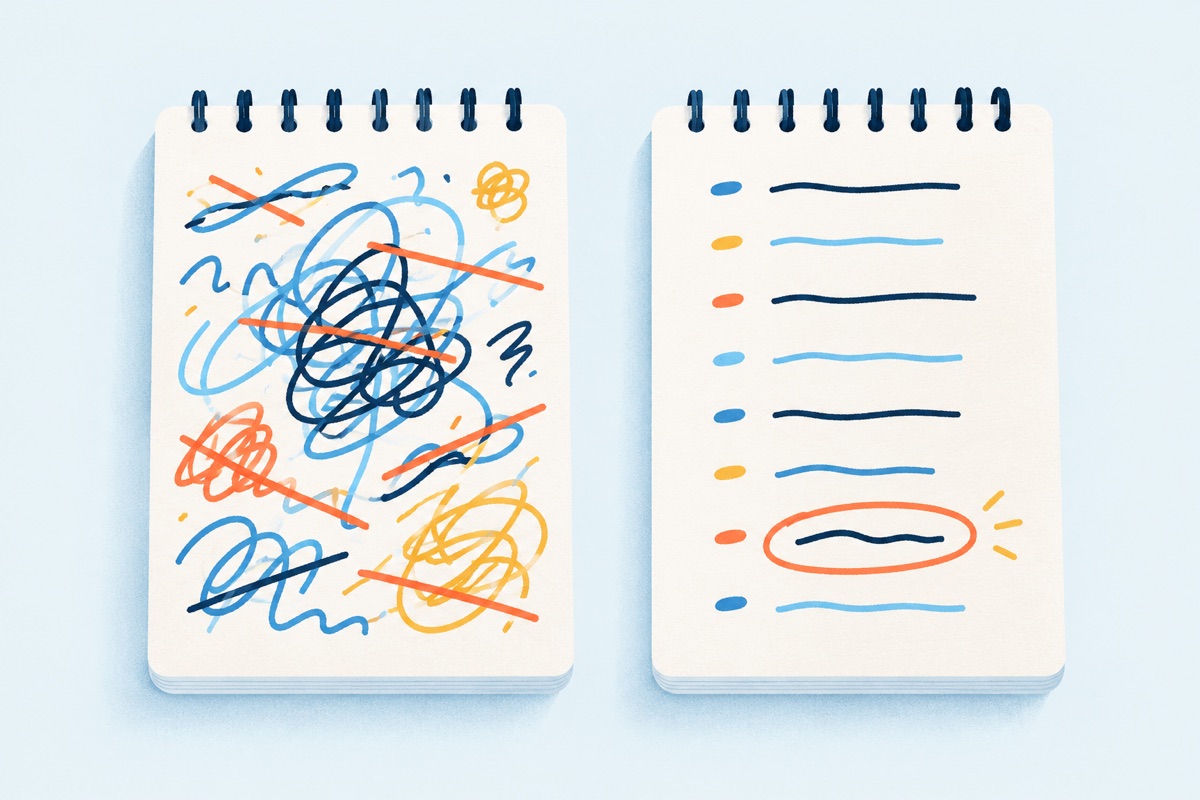
Translating means you turn each sentence into a short note on your pad BEFORE you do any math. One sentence, one note. You don't combine anything. You don't solve anything. You just write down what each sentence says, in symbols.
Most of the English you'll see turns into a small set of symbols:
| The words | The note |
|---|---|
| is, was, will be | = |
| of (with a fraction or percent) | multiply |
| more than, older than | add |
| 5 less than x | x − 5 (the order FLIPS) |
| twice, double | 2 × |
| 20 percent fewer than T | 0.8T |
| per, for each | divide (a rate) |
| how many, what is | the TARGET, so circle it |
That last row matters most. Before you touch anything else, write down what the question is actually asking for and circle it. That one habit wipes out a whole family of mistakes, and it's the reason you should stop solving for x when the question doesn't ask for x.

5 translation mistakes (and what to do INSTEAD)
Starting the equation before you finish the prompt. The last sentence often changes what the first one meant.
INSTEAD: read the whole prompt once, writing one note per sentence as you go. Only when every sentence has a note do you decide which notes to combine.
Translating 'in your head'. 'I'll just remember that each item costs $4 more.' No, you won't. Not at question 24, when you're tired and the clock is in the corner of your eye. And then you re-read the prompt, which costs you time AND focus.
INSTEAD: if it's a number or a relationship, it goes on the pad. Refusing to write it down isn't efficiency. It's pride.
Flipping 'less than'. '5 less than x' gets written as 5 − x all the time, because that's the order the words come in.
INSTEAD: TEST a VALUE on your own note. If x is 10, then 5 less than x is 5. Does your note give 5? That check takes five seconds and saves the whole question.
Using x for everything. Two unknowns called x and y means you'll mix them up by Step 3.
INSTEAD: use first letters. A for adults, C for children, L for last year. Your notes should tell you what each letter means without a re-read.
Ignoring units. Minutes and hours. Cents and dollars. The GMAT loves to switch them halfway through.
INSTEAD: write the unit next to every number in your notes. If the units don't match, fix it before you calculate.
Notice something? None of those five mistakes is about math. Every one of them happens before the math starts.
The format moves. The skill doesn't.
GMAC has announced a shorter GMAT Focus Edition for late 2023, with Quant, Verbal and Data Insights sections. Whatever version you end up sitting for, word problems will still be written in English, and you'll still have to turn that English into something you can work with. Training this habit now isn't wasted no matter which test you take.
Think about it like a tennis player drilling footwork. Nobody watches the footwork. It's just the reason the shot lands.
Your challenge for today
Pull ten word problems you've ALREADY done. Don't solve them. For each one, write only the translation notes, one per sentence, and circle the target. Then compare your notes to the setup in the official explanation.
Every place your notes don't match is a point you've been handing away for free. Count them. Then tell me the math is your problem.