Probability: Count the Outcomes Before You Do ANY Math

Here's a scene I watch play out every single week. A Test Taker reads a probability question and sees the words "at random." Their pencil starts moving before they've finished the sentence. Three fifths times two fifths. Done. Click. Next question. Ten seconds of confidence, one wrong answer.
The math wasn't the problem. The math was FINE. The problem happened before the math, when they never stopped to ask the only question that matters: what are ALL the things that could happen here, and which of them do I want?
Probability is a counting problem in a costume
Probability is just a fraction. On top goes the number of outcomes you want. On the bottom goes the number of outcomes that could happen. An outcome is one possible result, like "drew a red marble, then a blue one." That's the whole idea. Everything else you memorized ("and means multiply," "or means add," the formulas) is a shortcut for counting faster.
Shortcuts are great when you know exactly what they count. When you don't, they count the wrong thing very quickly. The GMAT knows that. The wrong answers on a probability question are often the exact results of the shortcut a rushed Test Taker would grab.
So the rule is simple. COUNT the outcomes first. Write them down when there are few enough. Only reach for multiplication once you can say, out loud, what each fraction stands for.
Try this one before you read further. It's a Problem Solving question, the regular kind of GMAT Quant question with five answer choices.

Why multiplying on instinct falls apart
Stop reading for a second and think about this. When you multiply fractions on a probability question, what two decisions are you quietly making?
Here they are. First: does ORDER matter, meaning is red then blue a different outcome from blue then red? Second: does the first pick CHANGE the second pick, meaning do things get put back or not? Every multiplying shortcut has to answer both. On instinct, you answer neither. You just multiply the first two fractions that show up in your head.
A list answers both questions for you. It doesn't care what you assumed. It just shows you what can happen. That's why counting first is not the slow way. It's the SAFE way, and on a test where you can't go back and change an answer, safe is fast.
This is the same lesson we keep hammering on other topics. Work rate questions get easier when you stop memorizing formulas, and probability does too. And if math has never been your thing, this is GOOD news. Listing and counting is a skill anyone can train, which is a big part of why you can still rock the GMAT if you struggle with math.
The mistakes I see every week
- Multiplying before you know what you're counting. You see two fractions and you smash them together. INSTEAD: before any math, write a short description of ONE outcome on your pad, like "marble, then marble, no putting back." If you can't describe one outcome, you can't count them.
- Forgetting the other order. You want "one of each" and you only count red then blue. INSTEAD: ask yourself if what you want could happen the other way around. If yes, your math has to include both ways.
- Treating look-alikes as one thing. Three red marbles become "red," and suddenly your total is wrong. INSTEAD: label them R1, R2, R3. It feels silly. It works.
- Adding groups that overlap. You count one group, count another, add them, and count some outcomes twice. INSTEAD: list both groups and cross out any repeats before you count.
- Doing it all in your head. This is pride, plain and simple. You think you're "too good" to write out ten pairs. INSTEAD: put it on paper, every time. Thirty seconds of notes is cheaper than one wrong answer you can never take back.
Here's one that punishes mistake number 4. Try it before you peek.
"But I don't have time to list everything"
Yes you do. The Quant section gives you 31 questions in 62 minutes, which is an average of 2 minutes per question. That's an average, not a rule for every question. Listing 10 pairs or two short lists of numbers takes about half a minute. I'll bet the last probability question you got wrong took you LONGER than that, because you did it, doubted it, did it again, and then guessed.
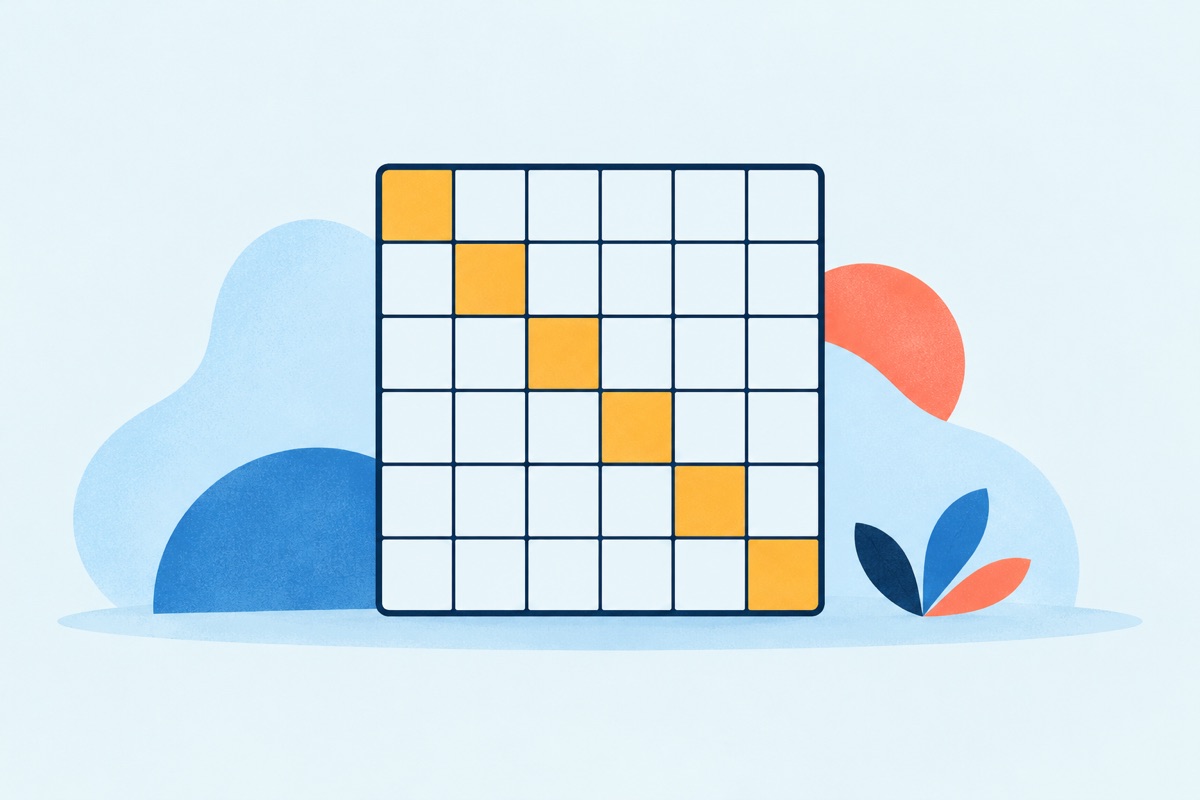
And when the list would be huge? Say you're rolling two dice, with 36 possible outcomes. You don't have to write all 36. Sketch a six by six grid, or write the first row and find the pattern. That's still counting. It's the same habit that makes prime factors easy: write it out, then let the pattern do the work.
The format matters here too. On the current GMAT, the test adapts question by question and you can't go back to fix an answer. Once you click, that probability question is gone. So what do you want MORE: to feel quick for ten seconds, or to actually get the point?
Your challenge for today
Pull up five probability questions you've already done, including the ones you got right. Redo every one, but this time you are NOT allowed to multiply anything until you've written down what one outcome looks like and counted (or listed) the outcomes you want and the outcomes that could happen. Then compare your new notes to your old work. Find the question where your first try got lucky. There's almost always one. That's the one that would have cost you on Test Day.