TRIAGE: Let One Question Go So You Can Get Three Right
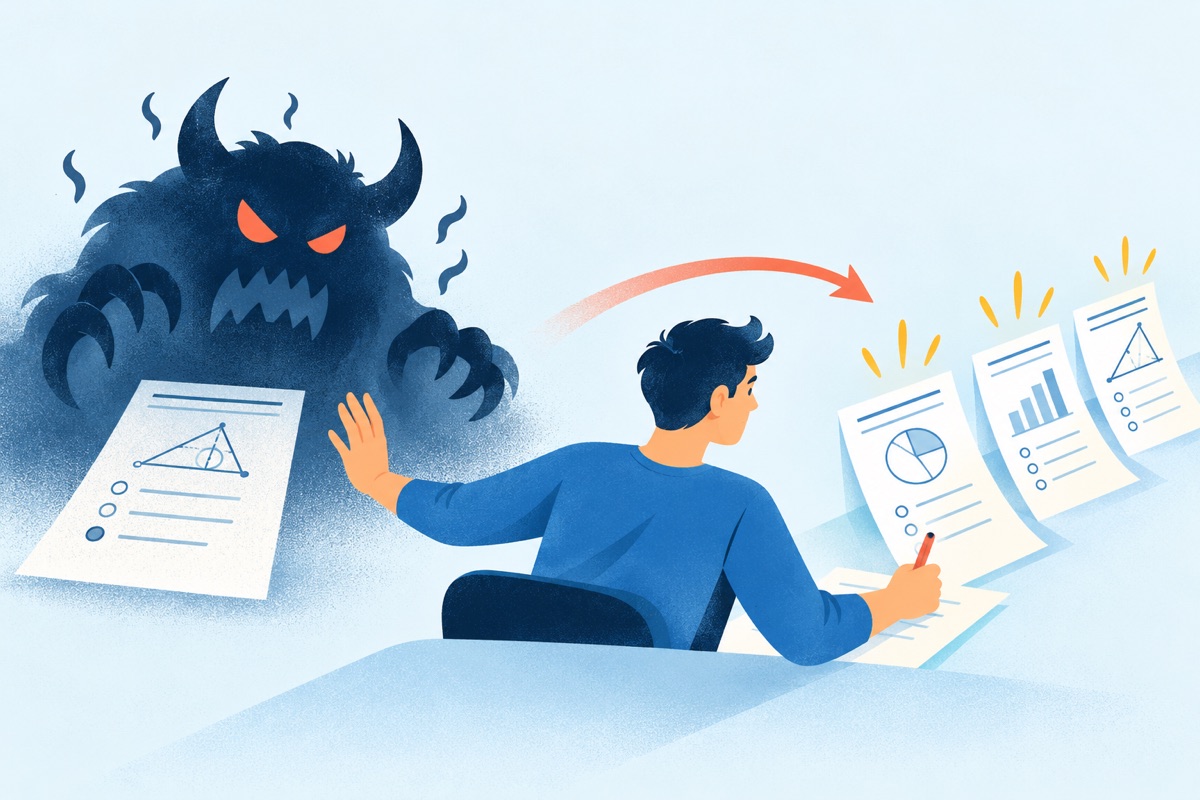
Say you're on question 9 of the Quant section. You've read it twice. You've started two different setups on your notepad and crossed both out. You KNOW you can get this one if you just keep going. Then you look at the clock and four and a half minutes are gone. You still don't have an answer.
I watch Test Takers do this every single week, and they always explain it the same way: "I didn't want to give up on it." Here's my blunt verdict. That's not grit. That's a TERRIBLE trade. You just paid more than two questions' worth of time for ONE question you're probably going to miss anyway. The good news is that this is one of the most fixable habits on the whole test.
The fix has a name: triage. In a hospital, triage means deciding who gets treated first so the most people come out okay. On the GMAT, it means deciding, fast and on purpose, which question you're going to let go so the rest of the section gets the time it deserves.
Do the math on what one fight costs
The GMAT Focus Edition has three sections, 45 minutes each, taken in any order you pick. Here's what the average time per question looks like, based on the format GMAC lays out on its exam format page:
| Section | Questions | Average time per question | What one 5 minute fight eats |
|---|---|---|---|
| Quantitative Reasoning | 21 | a little over 2 minutes | more than 2 average questions |
| Verbal Reasoning | 23 | just under 2 minutes | about 2 and a half average questions |
| Data Insights | 20 | 2 minutes 15 seconds | more than 2 average questions |
Now, an average is just an average. Some questions take 40 seconds. Some honestly need 3 minutes, and that's fine. The problem is the question where minute 3 turns into minute 5 and you're no closer than you were at minute 1.
Stop reading for a second and think about where that extra time comes from. It doesn't come from nowhere. It comes from the END of the section, from the last few questions you now have to rush.
Say you fight the monster for 5 minutes and miss it. Then you rush the last two questions and miss those too. That's THREE questions down, and two of them were questions you could have gotten right. Now flip it. You spend 30 seconds, see the monster for what it is, make a smart guess and move on. You've risked one question, and the other two get real time. Let one go, give three a fair shot. That's the whole trade.

How to spot a monster in 30 seconds
A monster is NOT just "a hard question." A monster is a question that will cost YOU far more time than it's worth, given what you know today. Those are different things. A long, wordy question can be totally gettable. A short, clean one can eat you alive. Here's the check I want you running on every question that makes you hesitate:
- Do I know my first step? Not the whole path. Just the first thing you'll write on your notepad. If you're 30 seconds in and nothing is on paper, that's a red flag.
- Can I TEST THE ANSWERS or TEST VALUES? Testing the answers means plugging the answer choices back into the question. Testing values means picking easy numbers for the letters. These rescue a LOT of scary looking questions. If neither one works and you have no setup either, that's a second flag.
- Is this a topic I rarely see and rarely get right? Your practice data should already tell you this. If it doesn't, you're not tracking enough.
Two flags and you guess. Not "one more try." You guess.
The mistakes I see every week
- "I've already put 3 minutes into it." That time is gone whether you finish or not. Throwing more time after it doesn't bring it back. INSTEAD: judge the question only by what it will cost you from NOW. If you're no closer than you were at minute 1, guess.
- Triaging only when panic hits. Guessing on four questions in a row in the last few minutes isn't triage. It's a crash. INSTEAD: make the call early, on ONE question, while there's still time to use what you saved.
- Calling every wordy question a monster. Long is not the same as hard. A lot of long questions are simple once you break them into pieces. INSTEAD: take notes as you read. If your notes hand you a first step, it's gettable. Keep it.
- Guessing blind. A pure coin flip on five choices is a waste of the 30 seconds you already spent. INSTEAD: knock out anything clearly wrong (too big, too small, wrong sign), then pick from what's left and move.
- Spending your review time re-fighting the monster. You can change up to 3 answers per section. That's a limited tool. INSTEAD: if you finish with time left, check the gettable questions where a silly mistake is most likely. That's where your missing points usually live.
- Letting pride make the call. "Smart people don't guess." Your score doesn't come with a note that says "but she really fought question 9." INSTEAD: spend your time where the points are. That IS the smart move.
Train it, don't hope for it
Triage won't magically show up on Test Day if you never practiced it. Under pressure, you'll do whatever you trained to do. So train it. Use the official practice materials, and when you review a practice test, pull up every question that took more than 3 minutes. How many of those did you actually get right? I'll bet that list of slow AND wrong is LONGER than you think.
If your Test Day score came in below your practice tests, check for this pattern first. One stubborn fight early in a section can wreck the whole back half. And don't measure your triage against what people post online about their pacing. Comparing yourself to strangers tells you nothing about which questions are monsters for YOU.
Here's the forced choice. What do you want MORE: to beat that one question, or a higher score? You can't always have both. A smart goal on the 205 to 805 scale doesn't need every question. It needs you to stop dropping the ones you can get.
Your challenge for today
Pick 10 Problem Solving questions you haven't seen. Give yourself 21 minutes, which is close to the real pace. On every question, run the 30 second check. Two flags means you guess, circle the question number and move on. No exceptions.
When the time is up, grade it. Then go back to ONLY the circled questions, untimed, and see how long each one really takes you. If a circled question takes you 6 minutes with no clock at all, you just proved the guess was the right call. If it takes 90 seconds, you just found a topic to train. Either way, you learned something about yourself today. Go do it.