Geometry: Draw It. EVERY Time.

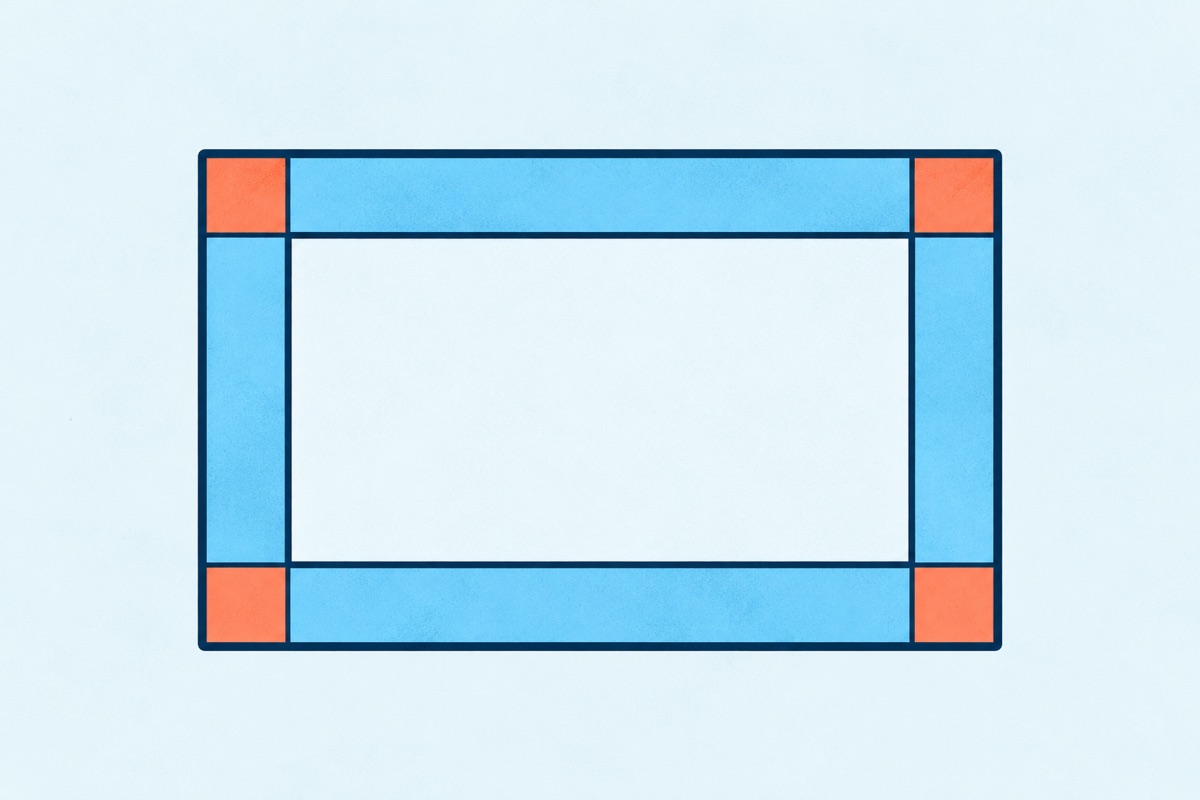
You read the question. A rectangle, a path around it, find the area. No figure on the screen. You think, I can see this. You do the math in your head, pick an answer in 40 seconds and feel great about it.
You got it wrong.
I watch this happen every single week. The Test Taker who misses a geometry question almost never misses the 'hard' one. They miss the EASY one, the one they were too proud to draw. So here's the rule, and there are no exceptions: on GMAT geometry, you draw the figure. EVERY time.
The questions you 'see' are the ones that hurt you
I'll bet that if you pull up the geometry questions you missed on your last practice test, most of them were not monsters. I'll bet you look at them and think, I KNOW how to do this. That's the point. You knew the math. You lost the point anyway.
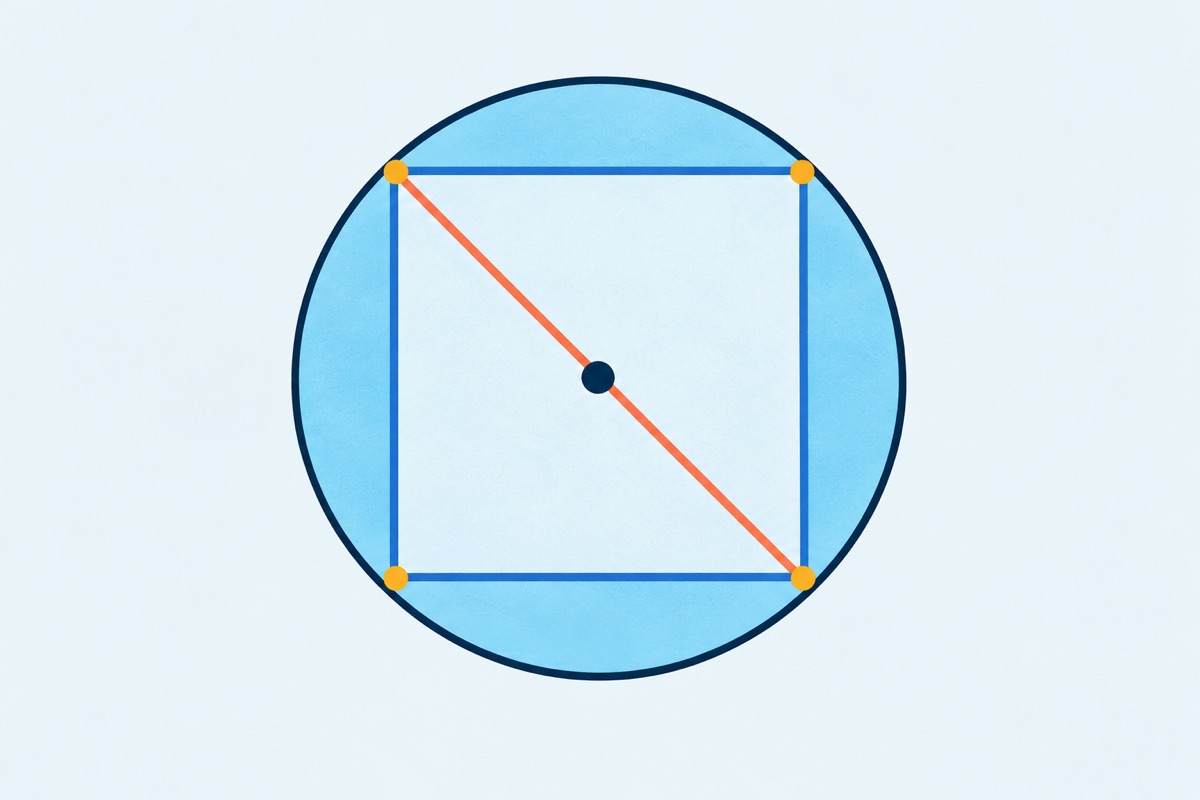
Why? Because your brain is a terrible sketch pad. When you 'see' a shape in your head, you fill in details that aren't there and skip details that are. A path that wraps around a garden becomes a path on one side. A square inside a circle gets the wrong measurement. These aren't knowledge problems. They're picture problems, and a picture on paper fixes them.
Stop reading for a second and answer this honestly: when you skip the drawing, what are you actually saving? Ten seconds? Fifteen? Now compare that to the cost of one wrong answer on a question you could have nailed. That's not a close call.
Try it before you read on
Here's a Problem Solving question (the standard GMAT math question with five answer choices). Do it the way you'd do it on Test Day. Then check yourself.
The 5 drawing mistakes I see most
Drawing is not enough on its own. You have to draw WELL. Here's what goes wrong.
Drawing in your head. This is the big one. You think the shape is simple, so you skip the paper.
INSTEAD: If the word triangle, circle, square, rectangle, line or angle shows up, your pen moves. No debate. Make it automatic in practice so you don't have to decide on Test Day.
Drawing it tiny. A shape the size of your thumbnail has no room for labels, so you leave them off.
INSTEAD: Draw it BIG. Give yourself room to write every length, every angle and every point name right on the figure.
Drawing without labeling. A shape with no numbers on it is a doodle. It doesn't help you.
INSTEAD: Put every fact from the question onto the figure. Write a question mark on the thing you're solving for. When you finish reading, you should be able to look at your drawing and never look back at the screen.
Copying the screen and stopping there. When the question gives you a figure, you think you don't need one.
INSTEAD: Redraw it on your pad anyway. You can't write on the screen. You CAN write on your copy, add lines to it, and split it into shapes you know.
Drawing only one picture on Data Sufficiency. On Data Sufficiency (the question type where you decide if the facts given are enough to answer the question), one drawing often fools you into thinking there's only one possible shape.
INSTEAD: Draw two or three versions that fit the facts. If they give different answers, the facts aren't enough. That's the whole point of deciding instead of solving on Data Sufficiency.
One more, because this one gets everybody
A quick term first. A shape is inscribed in another when it sits inside it and its corners just touch the outer shape.
'But I don't have time to draw'
YES, you do. You get 75 minutes for 37 Quant questions, as laid out on the official GMAT format page. That works out to a bit over 2 minutes per question on average. A quick labeled sketch takes maybe 10 to 15 seconds.
And here's what people miss: drawing usually SAVES you time. When everything is on the figure, you stop re-reading the question. You stop second guessing. You see the path to the answer instead of hunting for it. The Test Takers who 'don't have time to draw' are the same ones re-reading the prompt three times and running out of clock at the end of the section. Their pacing problem isn't a clock problem. It's a pen problem.
So you have to decide what you want MORE: a few seconds back on the easy questions, or the points you keep handing away on them. You can't have both.
This is pride, not speed
Let's call it what it is. Skipping the drawing isn't a time strategy. It's ego. It's the voice that says I'm too good at math to need a picture. That voice is wrong, and it's costing you. Strong math students lose geometry points ALL the time, because they treat the GMAT like a math test. It's not. It's a test of whether you can avoid the traps it sets on purpose, and drawing is how you avoid them.
The good news is this is completely fixable. The GMAT is predictable. You can train this habit the same way an athlete trains a motion: over and over until it happens without thinking. If you want more practice questions to drill on, GMAC's official practice materials have plenty of geometry to work through.
Your assignment for today
Go back to your last 10 geometry questions, right or wrong. Redo every one of them from scratch. Draw each figure BIG, label every fact from the question, and put a question mark on what you're solving for. Then answer honestly: how many of the ones you missed would you have gotten right with the drawing in front of you?
I'll bet it's more than you want to admit. Count them. Then never skip the drawing again.